Kaha Esebua and the Art of Unseen Stories
Explore original paintings by Kaha Esebua. Discover unique works available at Baranow Art Gallery.

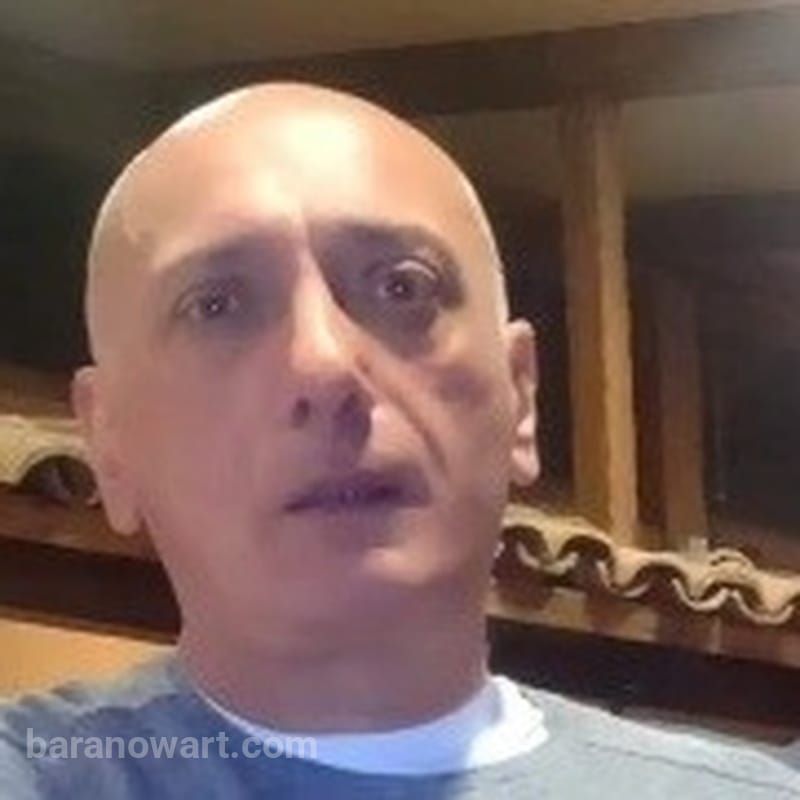
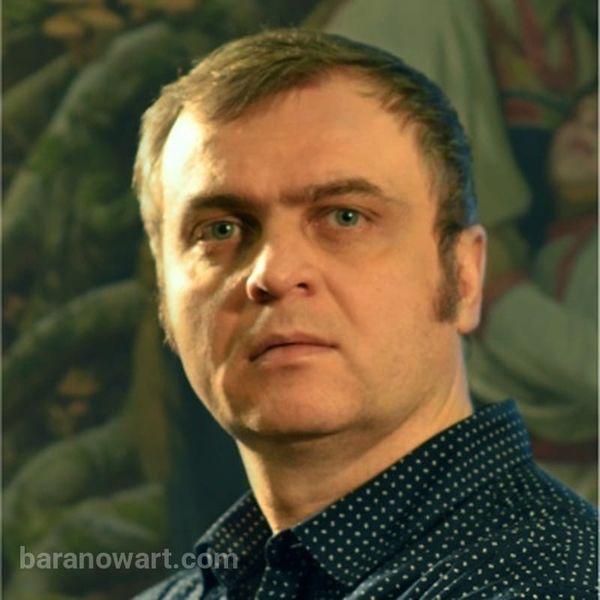
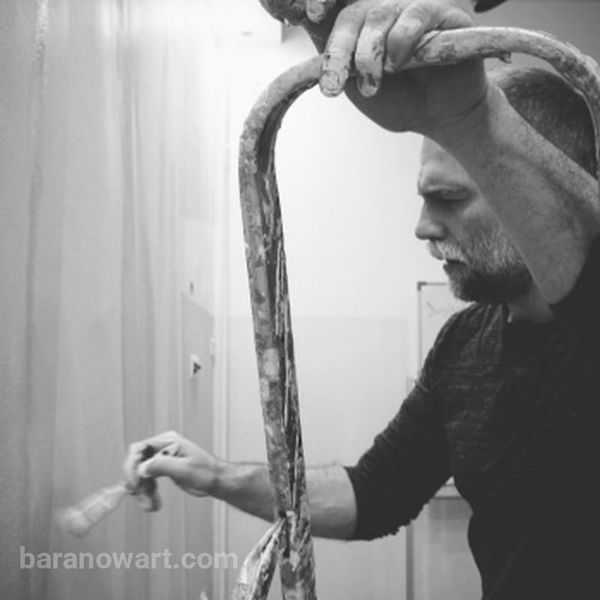
Kaha Esebua, born in 1964 in Tbilisi, Georgia, caught my attention with his unique storytelling ability through paintings. His works often draw me in, whispering stories that feel both personal and universal. Esebua has a style that blends the surreal with everyday realities, creating art that speaks to various layers of human experience.
His artistic journey began early on in Georgia, a country rich with cultural history and tradition. Growing up in Tbilisi surely influenced his creative outlook, and it's evident in how he enlivens the mundane. Whether it's the subtle details in his subjects' faces or the mystical elements woven into his scenes, Esebua's work is filled with a quiet complexity that keeps me returning to his art time and again.
Exploring "The Postman of Unwritten Letters"
"The Postman of Unwritten Letters" is one of Esebua's standout pieces. Measuring 60x80 cm and rendered in oil, this painting first appeared to me like a scene from a dream. There's a gentle stillness to it, where the postman stands, surrounded by various letters that seem more like whispers than physical objects. The choice of muted colors adds to the serene yet enigmatic mood.
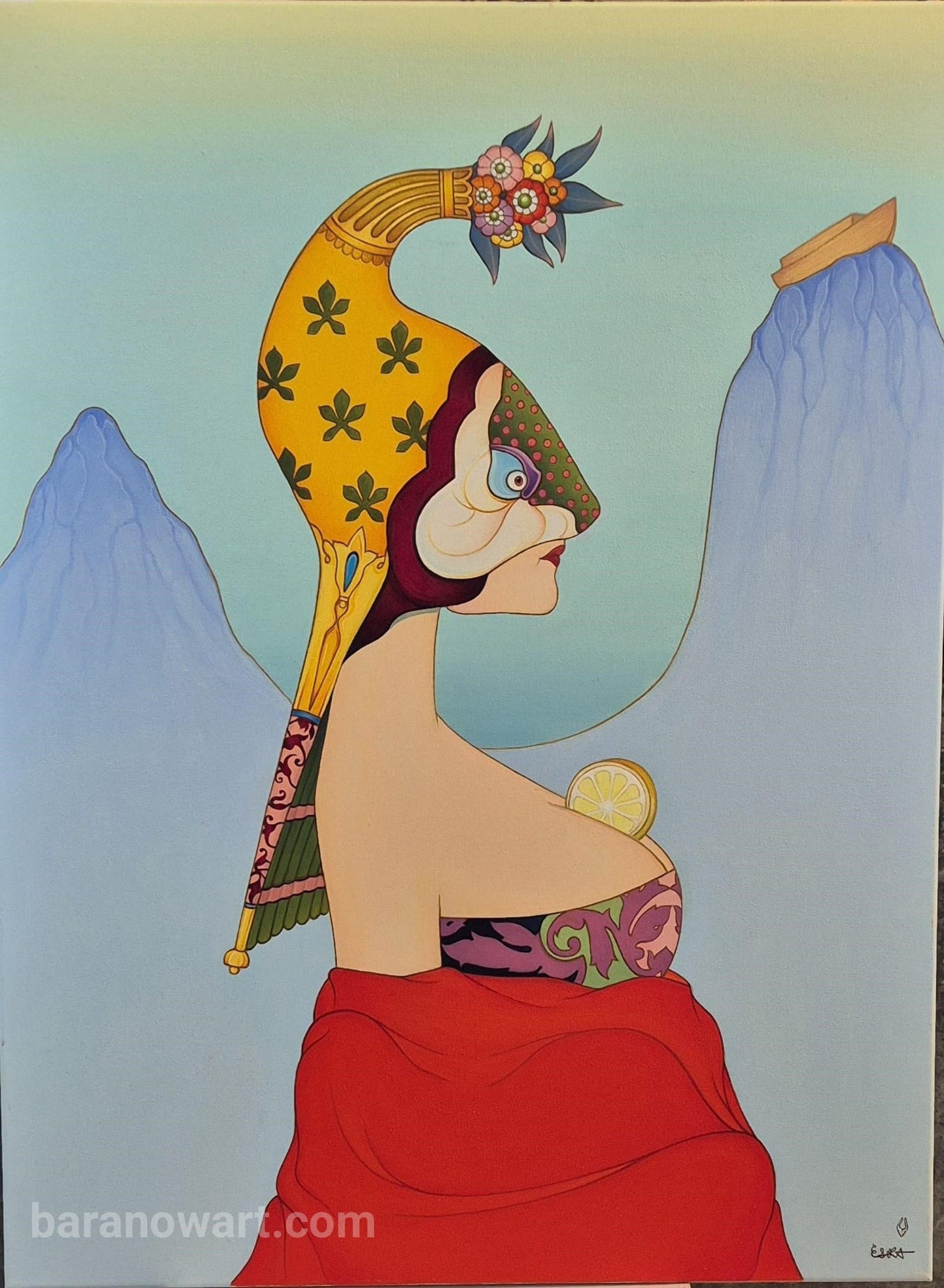
What strikes me is the way the postman is dressed in a timeless uniform, reminiscent of an era not bound by our current sense of time. The detail in the brushwork on his jacket and cap shows Esebua's skill in realistic representation. Yet, despite its realism, there's a surreal twist—letters float in the air, seemingly defying gravity, suggesting messages that were imagined but never sent. This mix of the real and the surreal invites the viewer to linger, to ponder the messages that never found their way.
Esebua's use of light in this painting is particularly noteworthy. It highlights the postman's face, adding a sense of contemplation to his expression, while casting subtle shadows that play around the floating letters. It's a delicate balance of illumination and shadow, keeping the viewer's eye moving across the canvas.
The juxtaposition of motion and stillness is what makes this painting captivating. Even in its quiet moments, it suggests an undercurrent of activity, leaving one to wonder about the stories carried by those unwritten letters. "The Postman of Unwritten Letters" is one of the pieces you can see when you visit Baranow Art. It's available for sale, a rare chance to own a piece of this visual poetry.
The Deep Symbolism of "Caretaker of the Cemetery of Love's Dreams"
The name itself—"Caretaker of the Cemetery of Love's Dreams"—is evocative. In this larger piece, 120x80 cm, Esebua explores themes of memory and loss with striking depth. Oil on canvas again allows him the richness to capture shadow and light in a hauntingly beautiful manner.
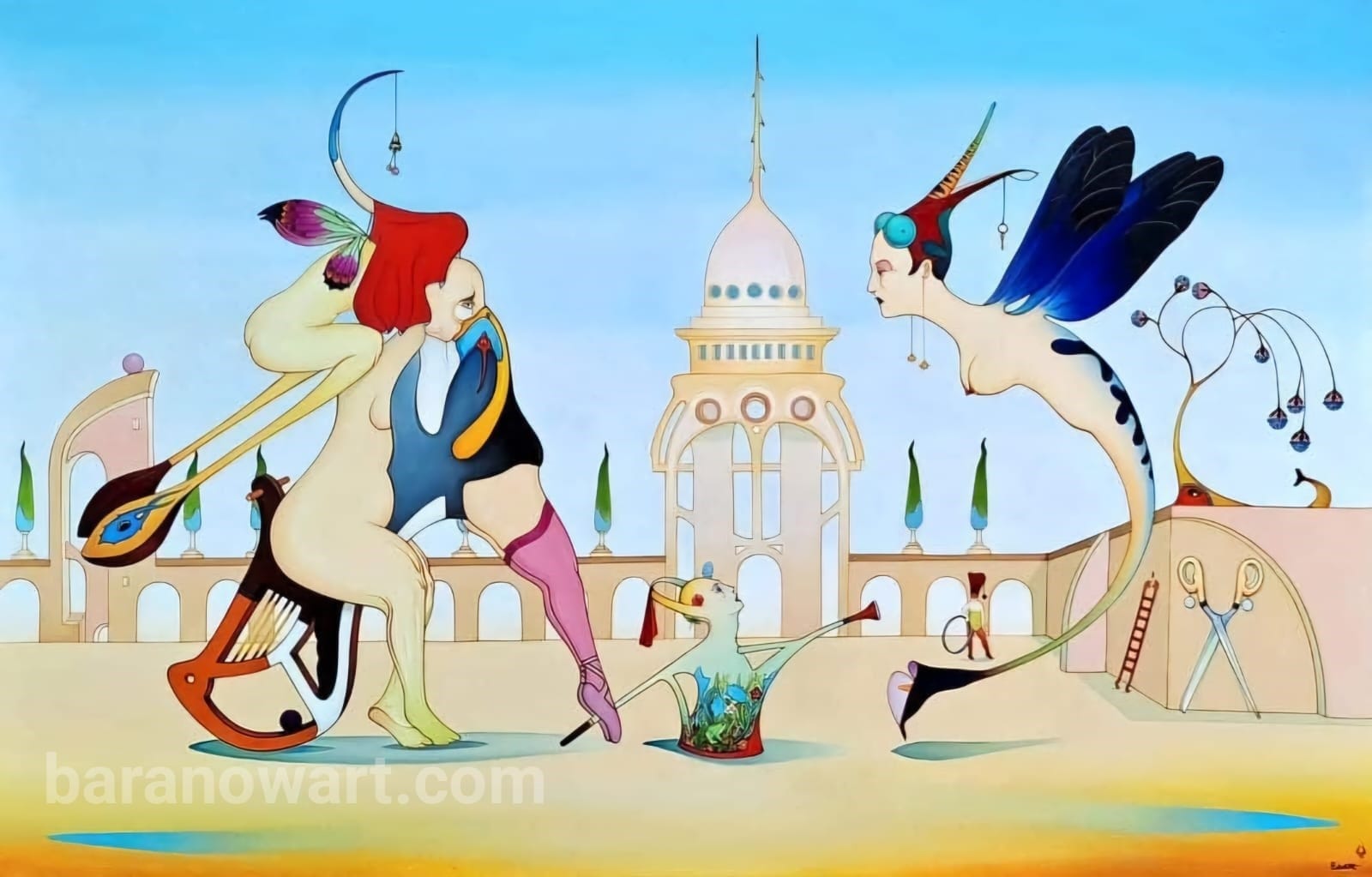
The setting, a cemetery, feels otherworldly. It could be a metaphorical place, holding the remnants of dreams and hopes once vibrant. The caretaker, central in the composition, appears almost solemn yet calm, as if at peace with the sorrow around him. Esebua's brushwork on the caretaker's coat highlights every fold and shadow, speaking to a life steeped in contemplation.
There's an eerie beauty in the tombstones and the surrounding landscape, crafted with softened edges and subdued color tones. They feel like memories fading into yesterday. The symbolism in every object is open-ended, inviting personal narratives and reflections on love and dreams. The trees, with their gnarled branches, almost seem to have a watchful presence, adding another layer to the painting's introspective mood.
Esebua's careful attention to spatial composition plays a vital role here. The careful arrangement of elements guides the viewer through a narrative arc, much like reading a story. His nuanced use of color variations further emphasizes the emotional weight of the scene, creating depth and contrast that arrest the viewer's imagination, compelling them to consider the cemetery as more than just a backdrop.
The Enigmatic "Condemned to Sleep"
"Condemned to Sleep," a vertically oriented painting measuring 80x120 cm, resonates with a mysterious calm. This oil painting presents a solitary figure, wrapped almost cocoon-like, amidst an ambiguous setting that could be both a shelter and a trap.
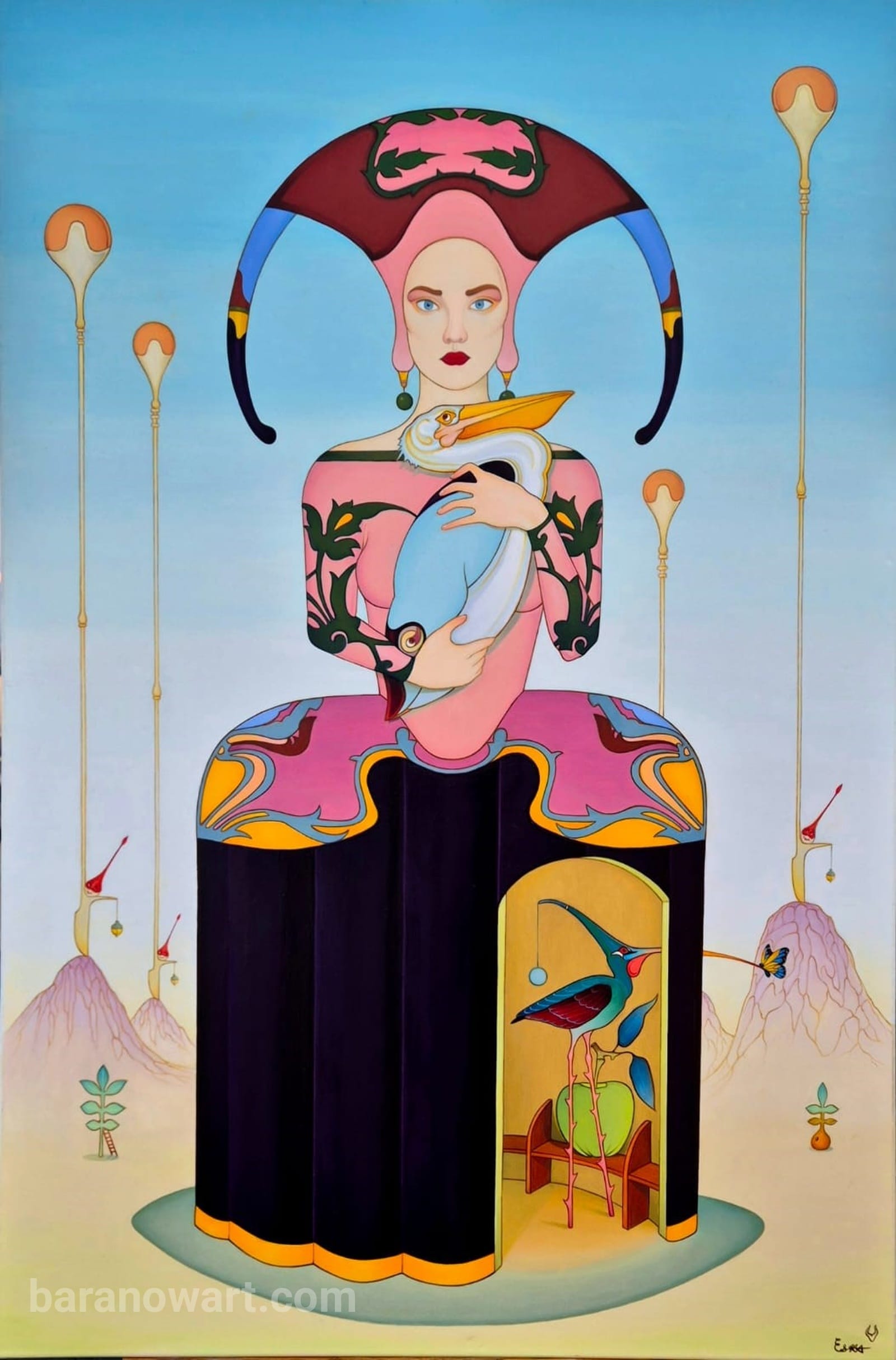
Here, Esebua's approach to color and texture transforms the simple act of lying down into something layered with meaning. The subject's posture and the gentle folds of fabric suggest both comfort and constraint, the dual nature of our need for rest and the fear of being forgotten.
The surrounding space, painted in deeper hues, offers a sense of isolation, drawing attention to the tension between presence and absence. Esebua's deft blending of colors creates an atmospheric quality that changes with the viewer's perspective, much like how dreams shift and alter in the mind. The use of contrasting colors around the figure enhances this effect, creating a visual echo of the solitude imbued within the piece.
The meticulous detail in the fabric and the way it envelops the figure invites contemplation of vulnerability and introspection. This work stops time, allowing one to reflect on the boundaries between the conscious and the subconscious. "Condemned to Sleep" invites viewers to pause and ponder their own place in the narrative of wakefulness and slumber.
While Esebua's paintings are rooted in the Georgian landscape and culture, they resonate far beyond, touching on universal themes. Each piece is a doorway to a story, an invitation to explore layers of time, memory, and imagination. At Baranow Art, you have the rare opportunity to engage with these stories intimately. Owning an Esebua painting is not just about having a work of art; it's about entering a quiet dialogue with the layers of human experience he so skillfully captures.